Elementary Signals Explained Intuitively for GATE ECE (Step, Impulse, Ramp, Sinc)
Signals & Systems is not just math — it's a language to describe real-world phenomena. From switching ON a light to transmitting data over the internet, everything can be modeled using a few powerful signals.
Keywords: elementary signals, unit step function, impulse signal, ramp function, signum function, sinc function, signals and systems GATE ECE
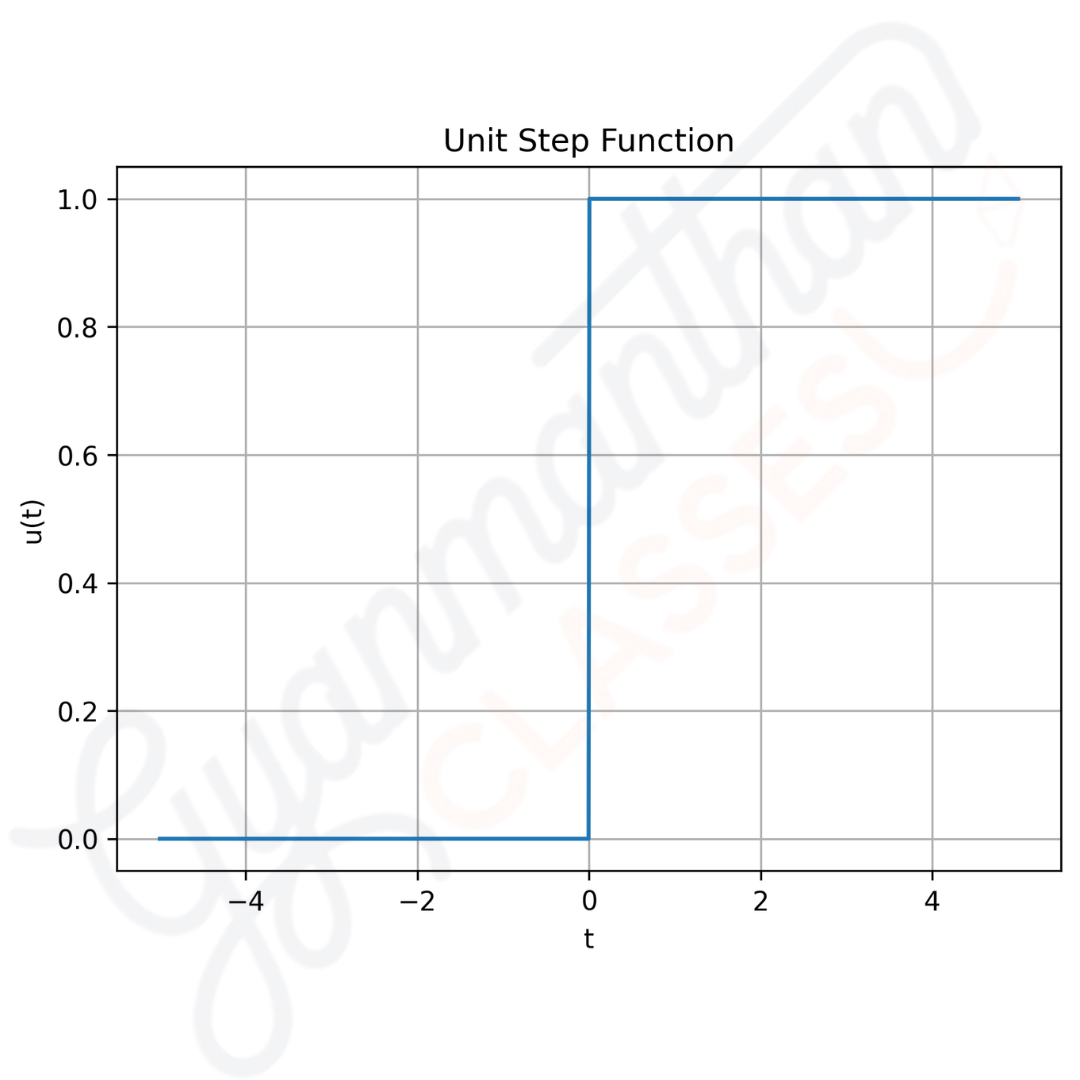
Unit Step Signal – The Switch ON Moment
$$ u(t) = \begin{cases} 0, & t < 0 \\ 1, & t \ge 0 \end{cases} $$
- Represents sudden activation
- Not differentiable at $t=0$
- Foundation for building piecewise signals
Real-Life Insight: When you turn ON a fan, it suddenly starts — that instant is modeled by step.
Deep Insight: Any signal can be broken into shifted step functions → core idea in system analysis.
Unit Impulse – The Instant Spike
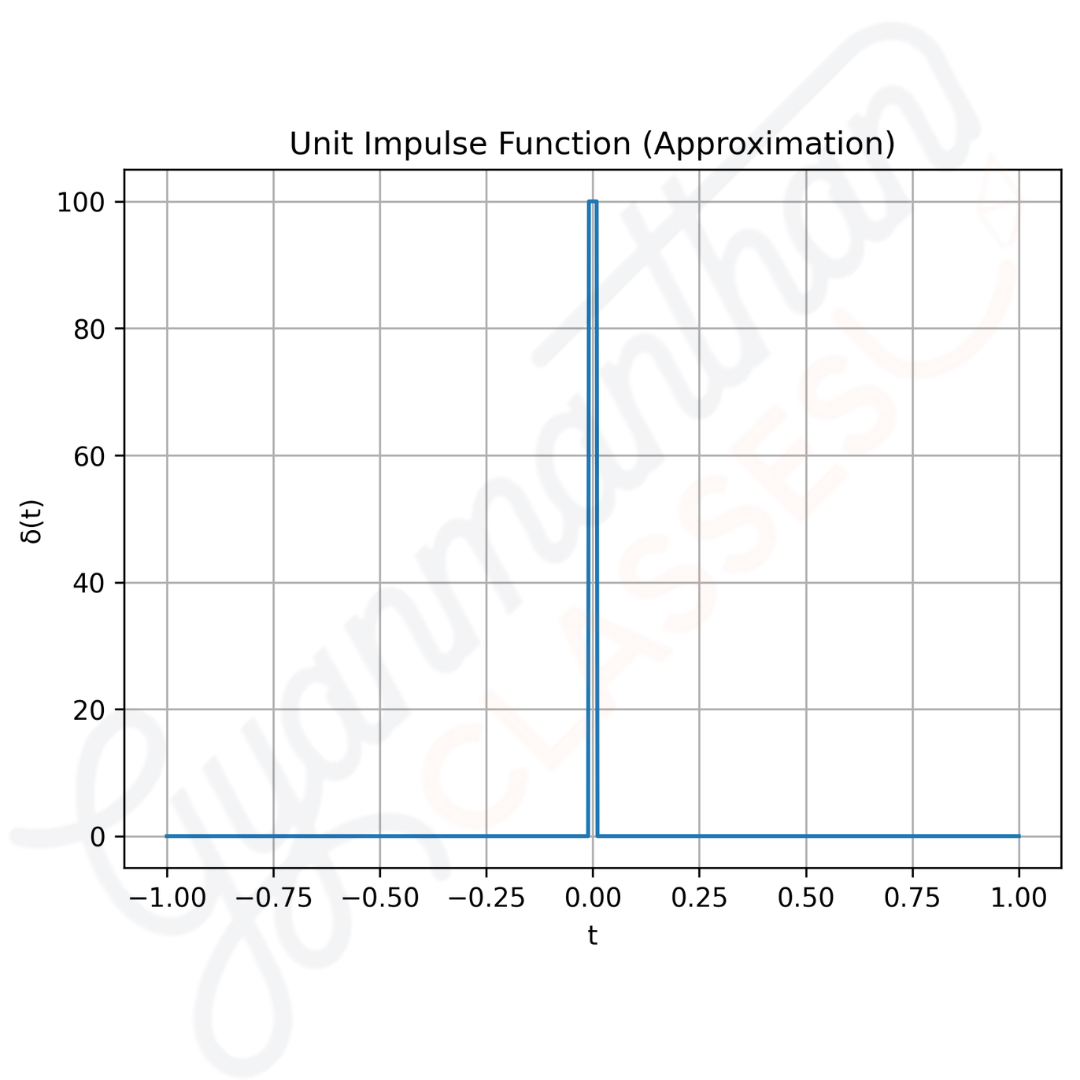
$$ \delta(t), \quad \int_{-\infty}^{\infty} \delta(t)\,dt = 1 $$
- Exists only at one instant
- Infinite amplitude, finite area
- Key to understanding system response
Real-Life Insight: A sudden clap or shock — happens instantly but has impact.
Deep Insight: Any signal = weighted sum of shifted impulses → foundation of convolution.
Rectangular Signal – Finite Duration Pulse
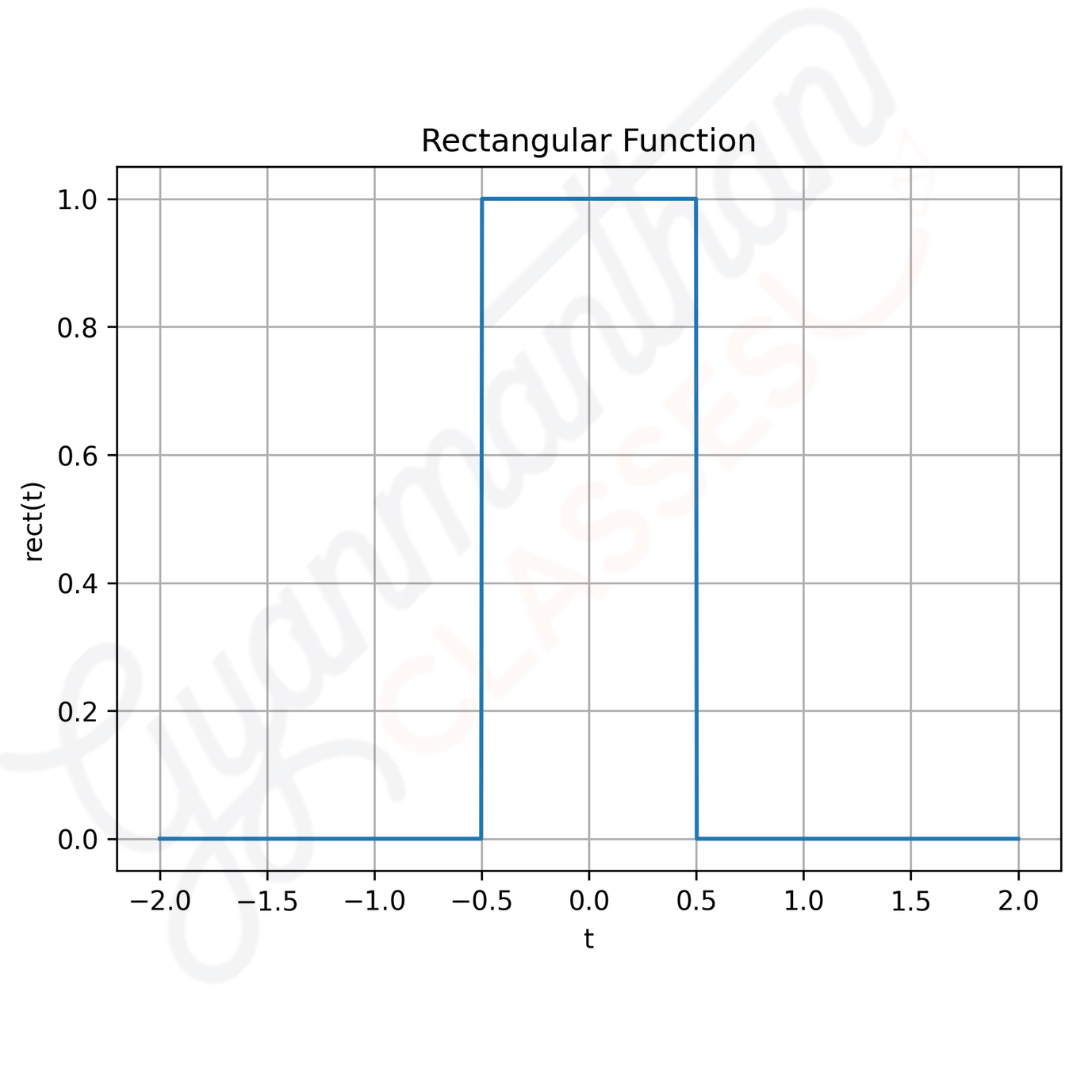
$$ \text{rect}(t) = \begin{cases} 1, & |t| \le \frac{T}{2} \\ 0, & \text{otherwise} \end{cases} $$
- Represents ON for fixed duration
- Used in digital signals & communication
Real-Life Insight: A signal sent for exactly 2 seconds, then turned OFF.
Deep Insight: Its Fourier Transform gives sinc → time-frequency duality.
Ramp Signal – Accumulation Over Time
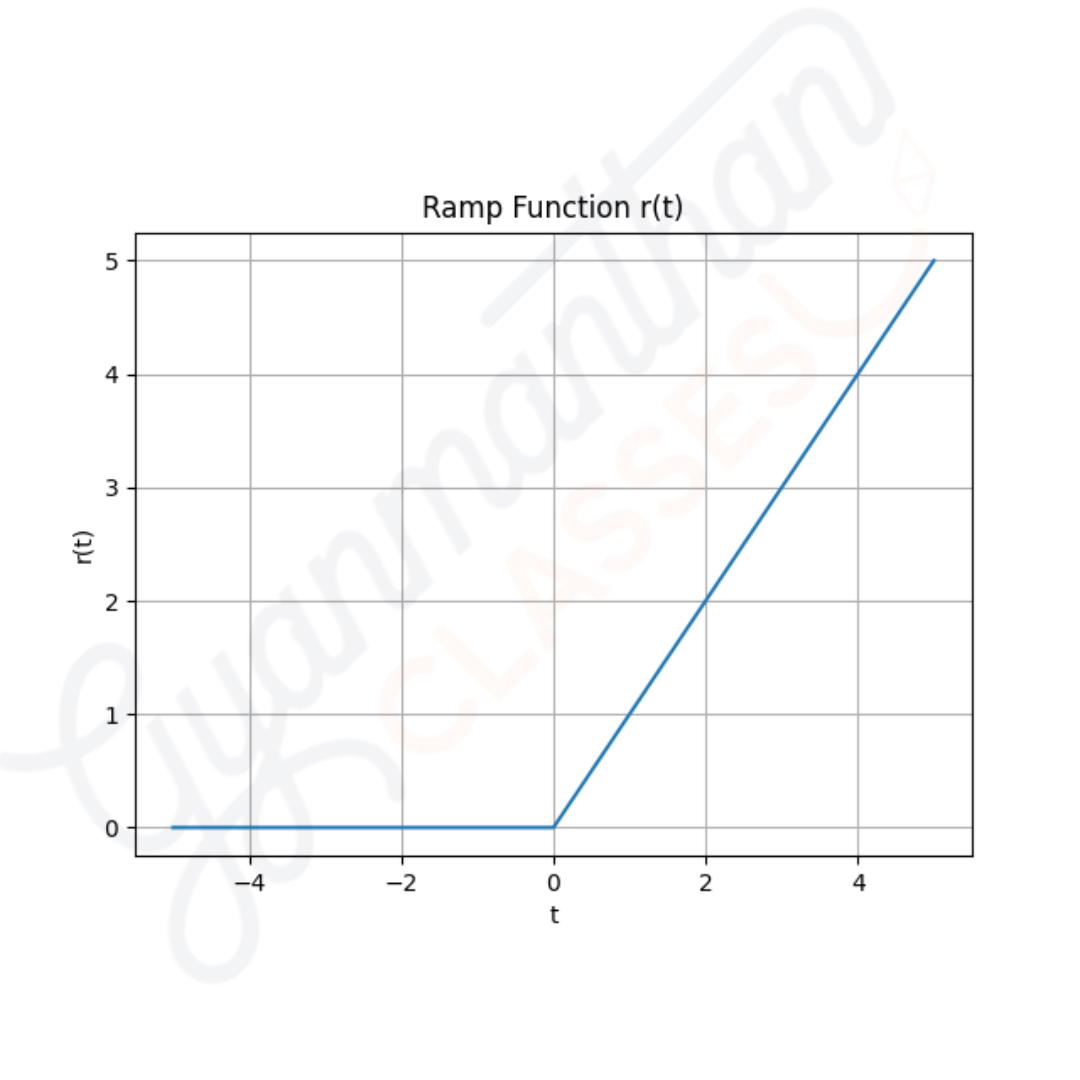
$$ r(t) = \begin{cases} 0, & t < 0 \\ t, & t \ge 0 \end{cases} $$
- Linearly increasing signal
- Integral of step function
Real-Life Insight: Water filling in a tank steadily.
Deep Insight: Represents accumulation → key in energy, charge, and system memory.
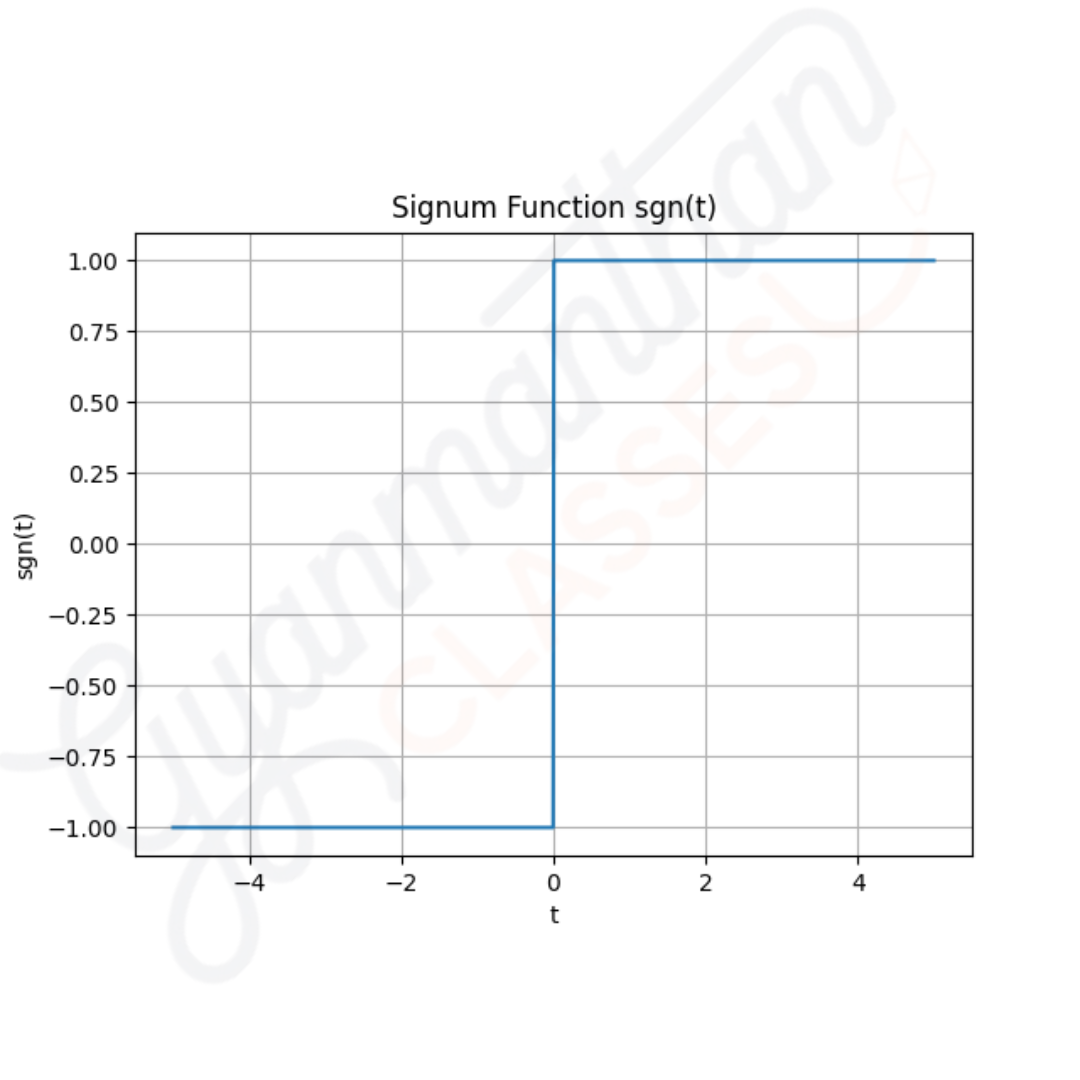
Signum Signal – Direction Indicator
$$ \text{sgn}(t) = \begin{cases} -1, & t < 0 \\ 0, & t = 0 \\ 1, & t > 0 \end{cases} $$
- Indicates sign of signal
- Used in symmetry analysis
Real-Life Insight: Direction of motion: forward (+) or backward (-).
Deep Insight: $$ \text{sgn}(t) = 2u(t) - 1 $$
Sinc Signal – The Frequency Master
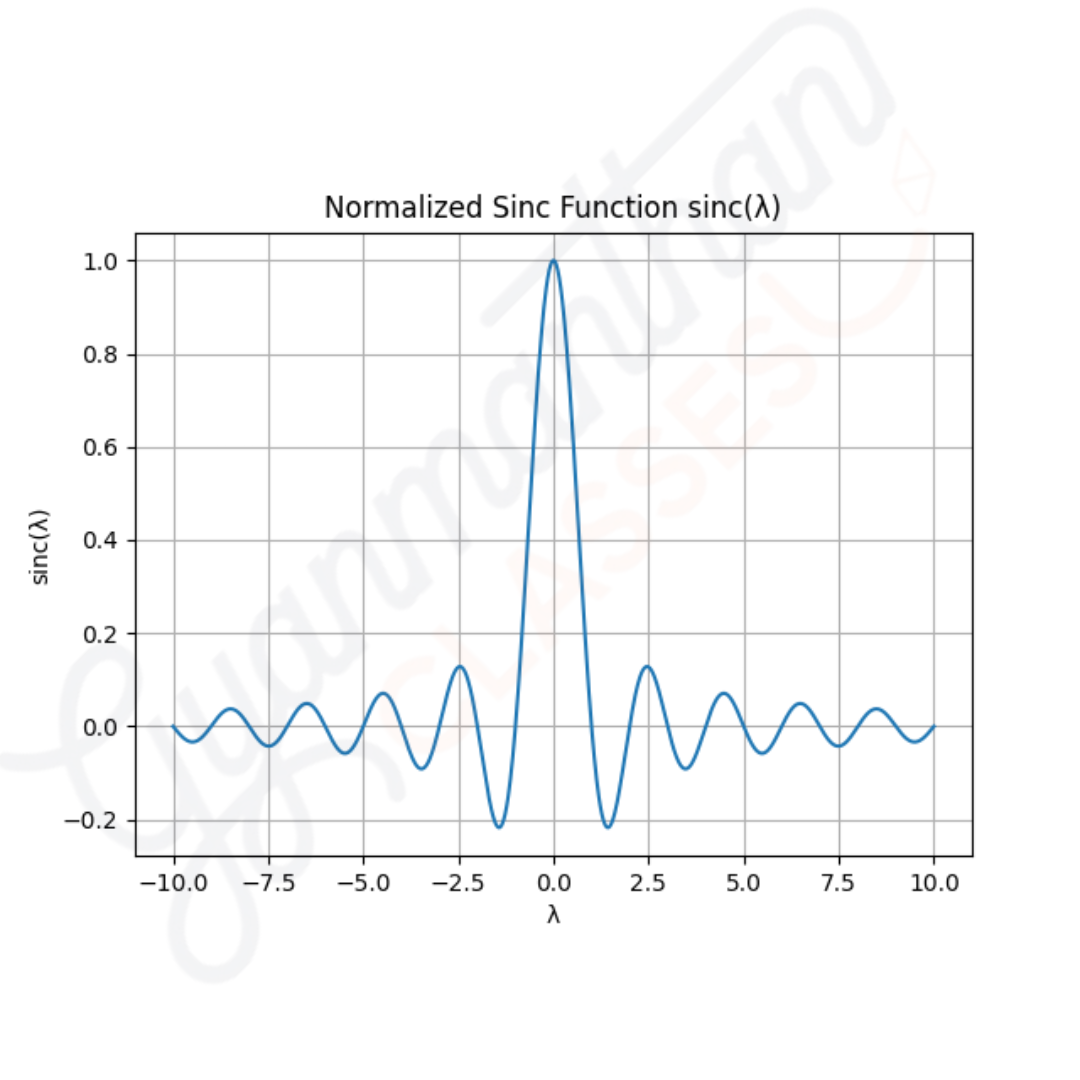
$$ \text{sinc}(\lambda) = \frac{\sin(\pi \lambda)}{\pi \lambda} $$
- Zero at $\lambda = \pm n,\; n \ne 0$
- Central in signal processing
Real-Life Insight: Appears in bandwidth-limited communication systems.
Deep Insight: Ideal low-pass filter response → impossible physically but critical theoretically.
Relationships Between Signals (Core Chain)
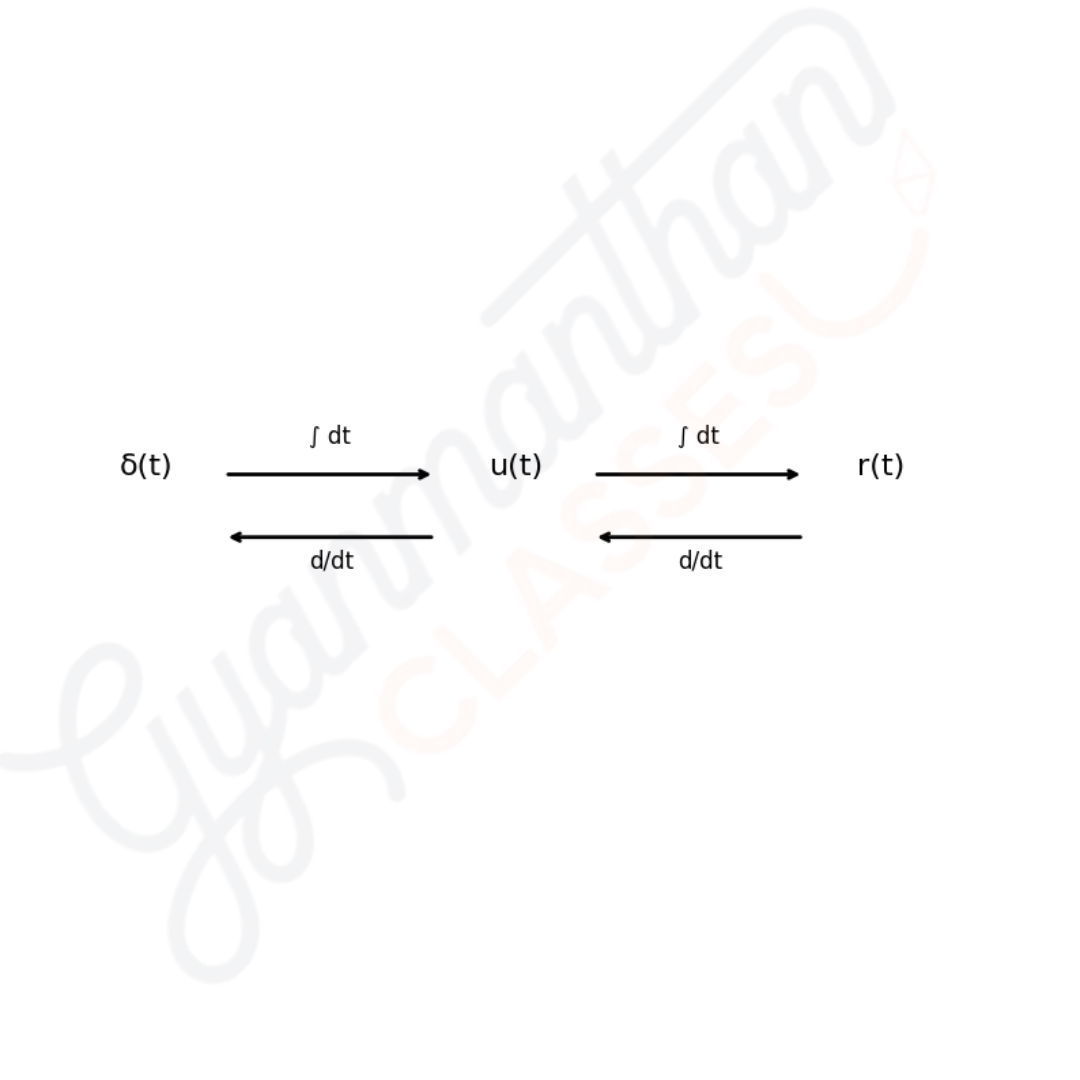
$$ \int_{-\infty}^{t} \delta(\tau)\,d\tau = u(t) $$
$$ \frac{d}{dt}u(t) = \delta(t) $$
$$ \int_{0}^{t} u(\tau)\,d\tau = r(t) $$
$$ \frac{d}{dt}r(t) = u(t) $$
- Impulse → Step → Ramp (integration chain)
- Reverse via differentiation
Power Insight: Master this chain → 50% Signals & Systems becomes easy.




Next: Continuous & Discrete-Time Signals – Concepts & Examples
Discussion / Comments